
p53 · RFX7 · Cell cycle · Promoter architecture
Fischer Laboratory of Genome Regulation
Otto von Guericke University MagdeburgWelcome to our lab
Decoding the regulatory logic that protects cells from cancer
The Fischer laboratory investigates how genome-regulatory networks govern proliferation, stress responses and cell fate. By connecting experiments in human cells with large-scale genomic data, the group resolves how p53, RFX7, DREAM, RB–E2F and promoter architecture shape tumour suppression and cancer-relevant gene expression.
Principal investigator
Prof. Dr. Dr. Martin Fischer
Professor of Biochemistry · Institute Director
Prof. Martin Fischer studies how transcription factors and promoter architecture control human gene expression and how these mechanisms form barriers to cancer. His group integrates biochemical and molecular-genetic experiments with omics technologies and computational analysis, with major programmes centred on p53, RFX7, cell-cycle transcription and closely spaced promoters. After leading laboratory and project work at the Leibniz Institute on Aging – Fritz Lipmann Institute in Jena from 2017, he was appointed W3 Professor of Biochemistry and institute director at Otto von Guericke University Magdeburg in October 2025.
Meet the laboratory →Research programmes
Four connected layers of genome regulation
01
p53-driven chromatin remodelling and enhancer activation
We investigate how p53 accesses closed chromatin, reshapes nucleosome organisation and establishes transcriptionally active enhancers.
02
RFX7 tumour-suppressor networks and cofactors
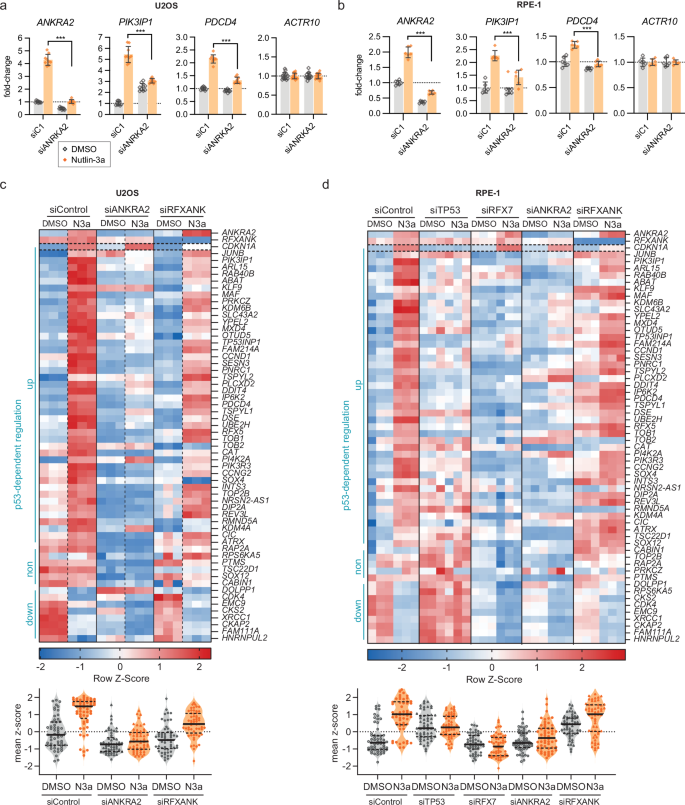
We define how RFX7 transmits stress signals to growth-suppressive genes and how cofactors such as ANKRA2 shape this response.
03
Cell-cycle transcription and tumour-suppressor pathways
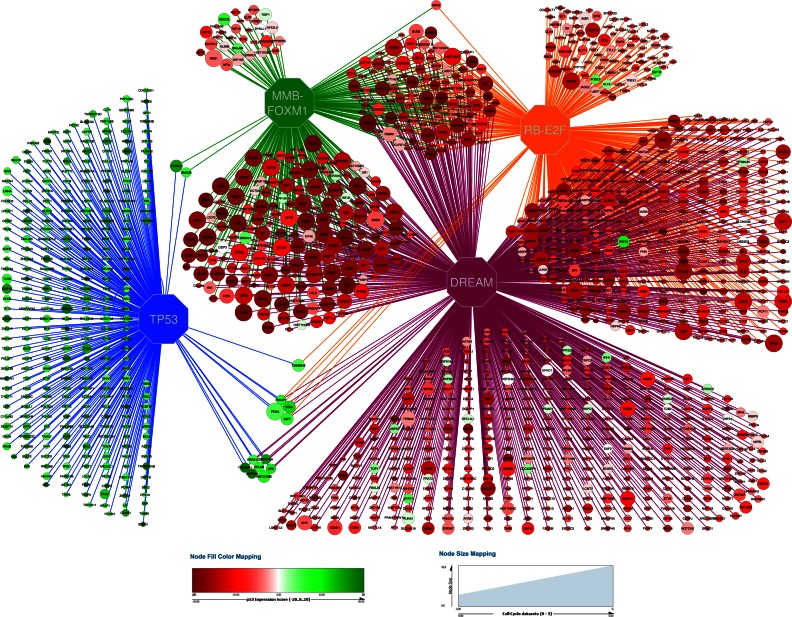
We map how DREAM, RB–E2F and MMB–FOXM1 coordinate G1/S and G2/M genes and how p53 restrains these programmes.

04
Convergent promoters and transcriptional dynamics
We study closely spaced promoters, antisense transcription and the principles that allow neighbouring transcription units to be co-regulated.
Selected publications
Recent and defining work
2026↗2025↗2025↗2024↗2024↗
Transcriptional interference revisited
Nature Genetics
p53 reveals principles of chromatin remodeling and enhancer activation
Nucleic Acids Research
Gene regulation by convergent promoters
Nature Genetics
p53 target ANKRA2 cooperates with RFX7 to regulate tumor suppressor genes
Cell Death Discovery
Determinants of p53 DNA binding, gene regulation, and cell fate decisions
Cell Death & Differentiation
Join the lab